


Description
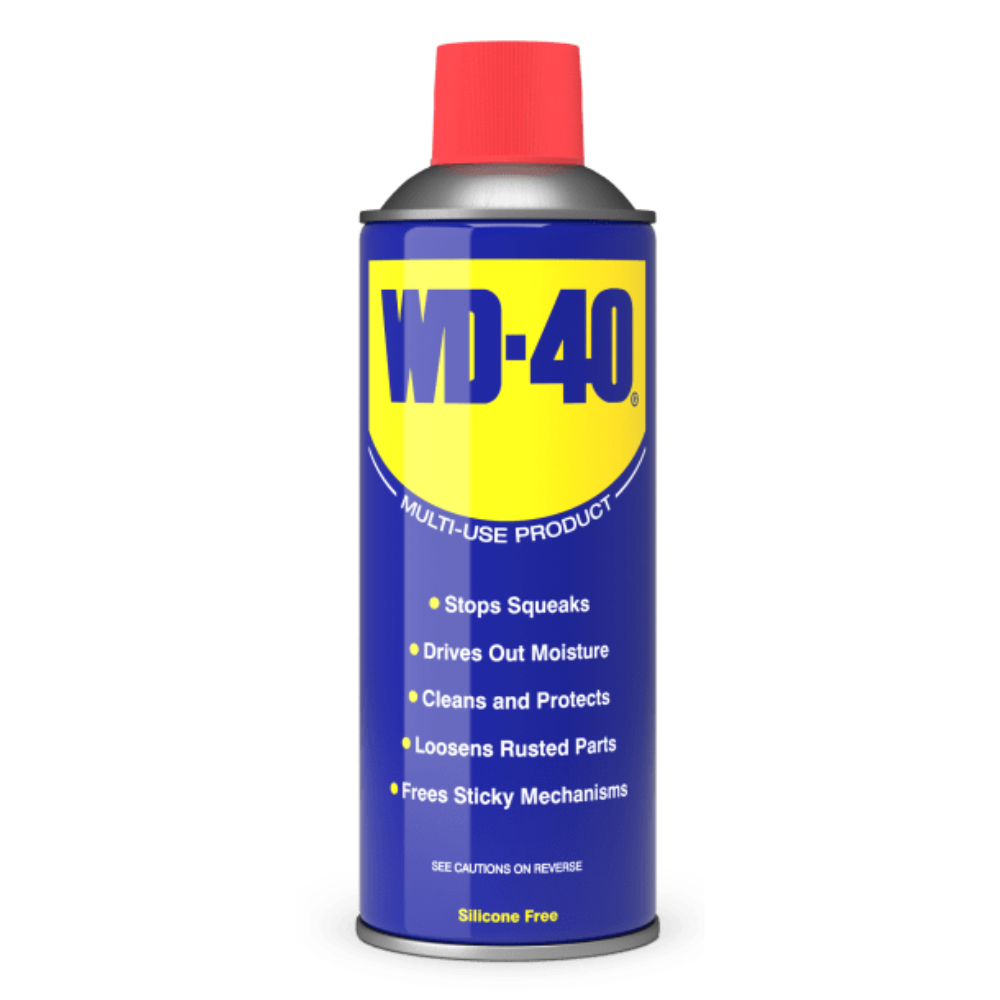
The WD-40 Multi-Use Product is an iconic maintenance spray originally developed in 1953 by the Rocket Chemical Company for the aerospace industry. Its name, which stands for Water Displacement, 40th formula, reflects the persistence of chemist Norman Larsen and his team, who successfully perfected the formula on their 40th attempt. Initially used to protect the outer skin of the Atlas Missile from rust and corrosion, its versatility quickly led to its adoption in households and workshops worldwide.
Core Functions and Capabilities
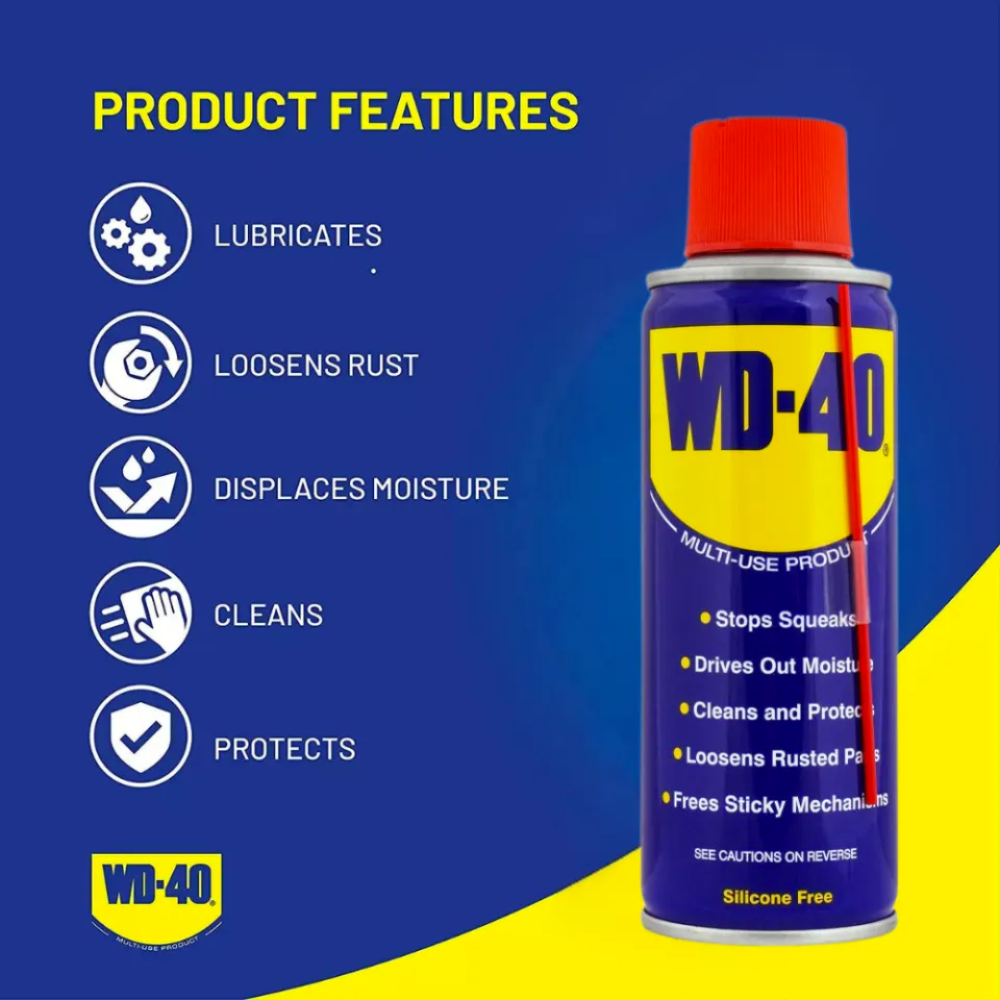
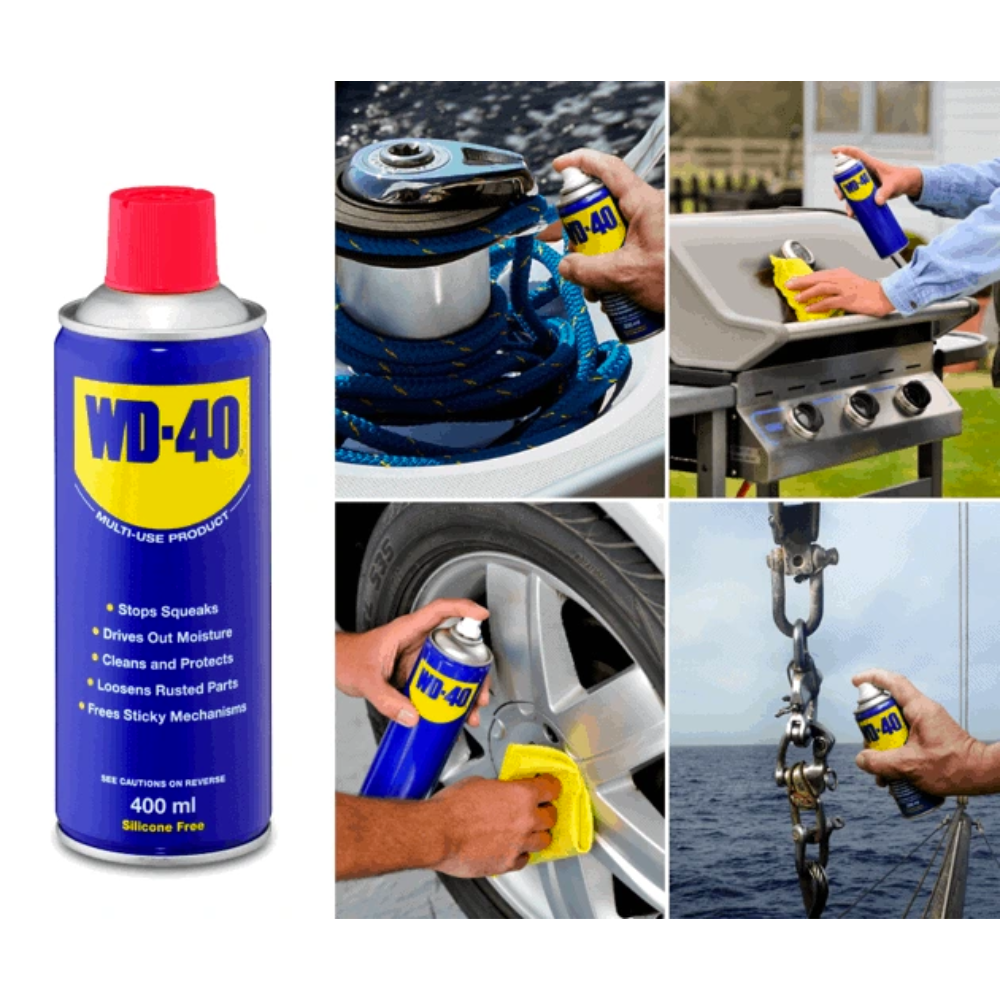
Often called a “jack of all trades,” the original formula performs five essential functions that make it indispensable for automotive, industrial, and home maintenance.
- Displaces Moisture: It is non-conductive and quickly dries out electrical systems to eliminate moisture-induced short circuits in everything from spark plugs to power tools.
- Protects Surfaces: The formula leaves behind a corrosion-resistant barrier that shields metal surfaces against moisture and other corrosive elements.
- Penetrates and Loosens: It has ultra-high surface attraction, allowing it to get under rust to free stuck, frozen, or seized metal parts like nuts, bolts, and hinges.
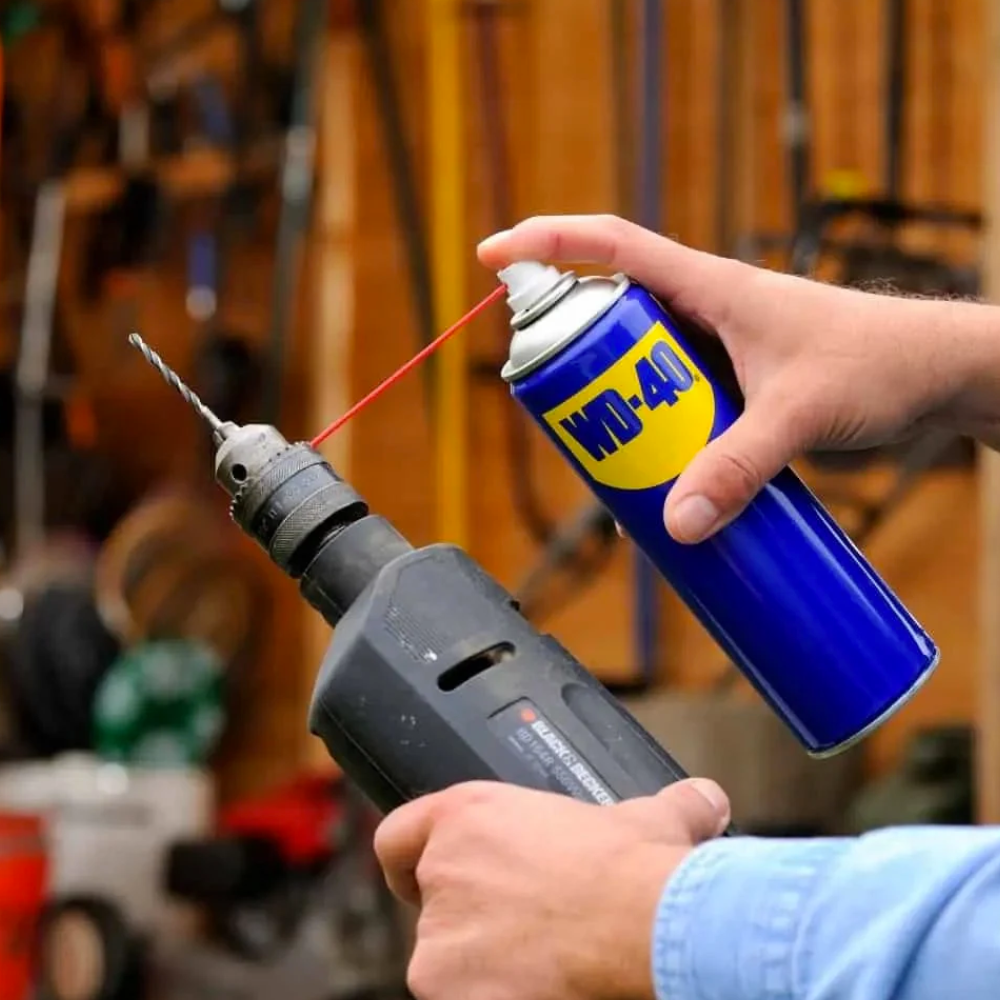
- Lubricates: While not a permanent grease, it provides immediate lubrication for moving parts, effectively silencing squeaks and reducing friction in light machinery.
- Cleans and Removes: It acts as a powerful solvent that gets under grease, grime, and gunk. It is highly effective at dissolving adhesives, making it easy to remove stickers, labels, and tape residue.
Technical Specifications
According to official Technical Data Sheets and Safety Data Sheets (SDS), WD-40 is a complex blend of petroleum-based ingredients.
- Composition: The formula contains 45–50% low vapor pressure aliphatic hydrocarbons and less than 35% petroleum base oil.
- Temperature Range: It remains effective in extreme conditions, with an operating range typically cited between -50°C (-60°F) and +150°C (300°F).
- Physical Properties: It appears as a light amber cloudy liquid with a characteristic mild petroleum odor. Its freeze/pour point is -63°C (-81.4°F).
- Safety: It does not contain silicone, kerosene, water, or chlorofluorocarbons (CFCs) and is inherently biodegradable according to OECD standards.
Surface Compatibility and Precautions
While safe for most surfaces, certain materials require caution during application.
- Safe Surfaces: It is compatible with nearly all metals (steel, aluminum, copper, brass) and many hard plastics and rubbers like HDPE, Teflon, and Neoprene.
- Surfaces to Avoid: It should not be used on polycarbonate or polystyrene as it may cause cracking or stress crazing. It can also soften certain wax finishes or wood coatings.
- Flammability: As an extremely flammable aerosol, it must be kept away from heat, sparks, and open flames.



There are no reviews yet.